Tuesday, May 27, 2014

We'll Find Alien Life in This Lifetime, Scientists Tell Congress

Humans have long wondered whether we are alone in the universe. According to scientists working with the Search for Extraterrestrial Intelligence (SETI) Institute, the question may be answered in the near future.

"It's unproven whether there is any life beyond Earth," Seth Shostak, senior astronomer at the SETI Institute, said at a House Committee on Science, Space and Technology hearing Wednesday (May 21). "I think that situation is going to change within everyone's lifetime in this room."

Scientists search for life beyond Earth using three different methods, Shostak said. [13 Ways to Find E.T.]

The first method involves the search for microbial extraterrestrials or their remains. Investigations include robotic missions to Mars, such as Curiosity and Opportunity, which are currently searching for signs that the Red Planet could once have hosted potentially habitable environments.

Local habitable worlds?

But Mars isn't the only target in the solar system. In fact, Shostak said there are "at least half a dozen other worlds" in Earth's neighborhood that have the potential to be habitable. Icy moons such as Jupiter's Europa and Ganymede hide subsurface oceans, while Saturn's largest moon, Titan, contains lakes of liquid methane, all of which could make the moons appealing homes for life.

A second technique involves examining the atmospheres of planets in orbit around other stars for traces of oxygen or methane or other gases that could be produced by biological processes. As an observed planet passes between Earth and its sun, a thick enough atmosphere has the potential to be detected. [10 Exoplanets That Could Host Life]

Shostak said both of these methods could yield results in the next two decades.

The third plan involves searching not just for life, but also for intelligent life — a project that SETI pioneers. By scouring the universe for signals in a variety of spectrums, SETI hopes to find intentional or accidental broadcasts from extraterrestrial civilizations.

Determining the success rate of such a program is difficult, but Shostak said that the best estimates suggest that a reasonable chance of success would come after examining a few million star systems. So far, SETI has examined less than 1 percent of those star systems. However, Shostak expects that number to increase as technology advances.

"Given predicted advances in technology, looking at a few million star systems can be done in the next 20 years," he said.

"Teeming with … life"

NASA's Kepler telescope has revealed that planets are abundant in the galaxy. Each of the 4 billion stars in our galaxy has an average of 1.6 planets in orbit around it, with one out of five of those planets are likely to be "Earth cousins." That means there are tens of billions of potentially habitable planets in the Milky Way alone.

"If this is the only planet on which not only life, but intelligent life, has arisen, that would be very unusual," Shostak said. [Poll: Do You Believe Alien Life Exists?]

On Earth, life arose in the first billion years of the planet's 4.5-billion-year history. Its rapid origination suggests that it could arise quickly elsewhere as well, which could result in a profusion of life on planets across the galaxy.

"I suspect that the universe is teeming with microbial life," Dan Werthimer, director of the SETI Research Center at the University of California, Berkeley, told the committee.

How much of that life might be intelligent is another question altogether.

On one hand, although life arose early in Earth's existence, complex — and then intelligent — life took much longer to develop.

"This place has been carpeted with life, and almost all that time, it required a microscope to see it," Shostak said.

However, Werthimer noted that intelligent life evolved in several species on Earth. He suggested that some planets evolve selective pressures that guide evolution toward different characteristics. On one planet, it may be most beneficial for life to be fast, while on others, it might need to be strong to survive.

"I think there are going to be some planets in the universe where it's advantageous to be smart," Werthimer said.

Hunting for intelligence

Werthimer outlined several of the programs SETI utilizes in its search for intelligent life. The most well known of these is its use of the largest telescope in the world, the 1,000-foot (305 meters) Arecibo Observatory in Puerto Rico. 

Although most astronomers would feel lucky to obtain a day of observations with the instrument, scientists at SETI have figured out how to "piggyback" their research onto other observations, allowing for virtually continuous observation of the universe.

It requires a significant amount of computing power to churn through the resulting data in search of signals. In 1999, SETI@home was released to allow members of the public to put their computer to work when it might otherwise be idle. Today, 8.4 million users in 226 countries have the program running as a screensaver.

"Together, the volunteers have created the most powerful supercomputer on the planet," Werthimer said.

When asked about potential safety issues with downloading the program, Werthimer said, "In my opinion, SETI@home is one of the safest things you can install on the computer." He pointed to the millions of users who have put it through its paces over the last 15 years. On top of that, the program is open source, which means that anyone can examine it for viruses or potential problems in the code.

In the next few months, SETI will launch its Panchromatic SETI program, using six telescopes to scour the skies for signals in a variety of wavelengths, including radio, optical and infrared.

"This will be an extremely comprehensive search," Werthimer said.

Another program seeks to eavesdrop on potential communications between two bodies in an alien solar system. Just as NASA sends signals to the Curiosity rover on Mars, or would need to communicate with a future outpost on another body in the solar system, alien civilizations may be in the process of exploring or colonizing their own neighborhood. By using information from Kepler, SETI scientists can observe when two planets line up in another system and attempt to eavesdrop on potential signals.

By relying on a multitude of technologies in the search for advanced alien civilizations, SETI hopes to increase its odds of finding intelligent life beyond the solar system. Programs continue to evolve alongside technology, as SETI attempts to put a new one in play each year.

"I think the best strategy is a multiple-[pronged] strategy," Werthimer said. "We should be looking for all kinds of different signals and not put all of our eggs in one basket."

Shostak agreed, and noted that dated technology, such as radio signals, may not necessarily be obsolete.

"One shouldn't discount a technology just because it's been around awhile," he said. "We use the wheel every day."

If scientists were to discover a signal that might potentially stem from an alien civilization, the news would spread fairly rapidly. SETI might ask observers at another observatory to verify the data before officially announcing it, but such news would never stay under wraps for long.

"The public has the idea that the government has a secret plan for what we would do if we picked up a signal," Shostak said.
But he said he's received no calls or clandestine visits for the false alarms SETI has already observed.
In fact, Shostak said the news will spread before it can be fully verified.

"There will be false alarms," he said.

Funding the search

For all their optimism about the potential to find new life, both Shostak and Werthimer were realistic about the limits of their research. Currently, SETI houses only 24 full-time scientists. Of those, two-thirds are from the United States.

The Berkeley program exists primarily on a budget of roughly $1 million a year, made up of research grants from NASA, the National Science Foundation (NSF) and private donors.

The two primary telescopes utilized by SETI are also in jeopardy. Budget cuts have been made to the Arecibo telescope, while the NSF plans to discontinue funding for the Green Bank telescope in West Virginia.

At the same time, China is building a radio telescope nearly twice as large as Arecibo, while the Square Kilometer Array Telescope project is in progress in South Africa. Both telescopes stand to become significant SETI observatories, and the United States isn't involved.

"The U.S. may not continue to lead this work," Werthimer said.

"I would find that disappointing," Rep. Suzanne Bonamici, D-Ore., responded.

Both Shostak and Werthimer expressed their optimism that intelligent life exists somewhere in the galaxy, and that it should be detectable in the near future, as long as SETI continues to receive the support it needs. Between the knowledge that might be obtained from an advanced civilization and the idea of mankind's biological intellectual place in the universe, humans stand to gain a great deal from learning that we are not alone.
"Finding other sentient life in the universe would be the most significant discovery in human history," said Committee Chairman Lamar Smith, R-Texas.

Put your computer to work by installing SETI@home.

Follow us @Spacedotcom, Facebook and Google+. Original article on Space.com.
Copyright 2014 SPACE.com, a TechMediaNetwork company. All rights reserved. This material may not be published, broadcast, rewritten or redistributed.


By  Nola Taylor Redd

We'll Find Alien Life in This Lifetime, Scientists Tell Congress

Sunday, May 25, 2014

Understanding Alien Messages May Be No Different Than Decoding theRosetta Stone

The world's largest radio telescope in Arecibo, Puerto Rico, where lots of SETI research is done. Image: Flickr/Hmboo Electrician and Adventurer

If we find an intelligent alien civilization, how will we talk to its inhabitants? There is, perhaps, no question that has been more frequently considered within science fiction. Well, now it's a question that NASA is very seriously thinking about and it's explored, at length, in a new e-book published by the agency.

The thing is, talking to aliens (or, the theoretically nearer-term challenge of decoding an alien radio communication), might not be all that different from understanding ancient Egyptian hieroglyphics or deciphering long-lost artifacts from a foreign culture. Sure, for all we know, aliens might all communicate with telepathy, with undetectable pheromones, or, in what would be a nice, easy twist, maybe they just straight up speak English like Kang and Kodos.

But it's also possible that they communicate in a way that might be reasonably decipherable, according to Douglas Vakoch, director of interstellar message composition at the SETI institute and editor of the book, called Archaeology, Anthropology, and Interstellar Communications.

"For a couple thousand years, we had no idea what the hieroglyphs said. We had this idea of them as this abstract, exotic language, this super language that had some higher meaning," he said. 

"Ultimately, that's not what they are. They are like other languages, and we just had to free ourselves of an assumption that held everyone captive. We had to see them in a new light and assume they were just like every language."

The idea explored in the book, then, is that, yes, alien messages might be impossible to decipher, but, assuming it's a radio signal or some other sort of electronic pulse, they must have a similar understanding of science and math as us. It's pointless to assume that, simply because a civilization is alien, they will be impossible to communicate with. And we can likely crack the code. 

The Rosetta Stone obviously helped us with the hieroglyphics problem, and Vakoch admits that "we aren't going to get something that is written in English and Klingon" to make it easy to translate between the two. But, he says, we can take analogs from what we do know: "We can think, do we have an analog to the Rosetta Stone? You can look at things like math and science. If you can build a radio telescope, then you must know some basic math, and you can look at those as potential rosetta stones."
What's important to note about Vakoch is that he's a social scientist, not an astrophysicist, as are most of the other contributors to NASA's new book.

"Even my background is in psychology, where we're attuned to understanding people who think like us," he told me. 

"Well, anthropologists and archaeologists are used to making contact and connections with completely foreign things. They have this mindset of encountering the 'radically other,' so most of them [were] very receptive to contributing to this book."

The first problem, of course, is actually detecting alien life. There's obviously no guarantee extraterrestrial intelligent life exists, and there's certainly no guarantee we'll find it. Vakoch says that SETI is a field that "requires tremendous patience," and thought experiments like this book are ways of helping prepare us to be ready to interpret an extraterrestrial message should we ever find it.

The fact that NASA published this book, and the fact that, just this week, the House of Representatives Science Committee held a hearing about SETI, is evidence that the government is once again beginning to take the search for intelligent life a little more seriously.

"It's very easy to make fun of this, just like it also would have been funny to make fun of Magellan before he sailed around the world," Seth Shostak, a senior astronomer with SETI, told Congress. "We looked in particular directions at a few thousand star systems—the fact we haven't found anything means nothing. This is like asking Christopher Columbus two weeks out of Cadiz if he'd found any new continents yet. We have to look at a few million star systems to have a reasonable chance."

And, if we do find something, NASA wants to be ready.

Jason Koebler

Understanding Alien Messages May Be No Different Than Decoding the Rosetta Stone | Motherboard

Friday, May 23, 2014

Little ‘coqui’ frog of Puerto Rico shows effect of climate change

A study on the differences in size and mating calls of a tiny Puerto Rican frog over a 23-year period suggests the male frog is getting smaller and its mating call becoming shorter and higher pitched. The differences may be caused by climate change.
The frogs known in Puerto Rico by the name "coqui" are some of the 186 species of the genus Eleutherodactylus inhabiting forests of southern United States, Mexico, Guatemala, and the Caribbean islands. There are 17 endemic species of coqui in Puerto Rico. For its abundance, the best known is the “Common Coqui” (Eleutherodactylus coqui). The species is named for the call that males produce. The call has two notes that sound like "Co" and "Qui" (hear it in video above). These sounds serve two purposes; "Co" serves to repel other males and establish a territory, while "Qui" serves to attract females.

Only male coquis sing. They start singing when the sun goes down at dusk, all night long until dawn. The Common Coqui is an animal of great importance in the culture of Puerto Rico and has become an unofficial symbol of the island.

The males are smaller than females. They measure an average of 27 millimetres while the females’ average size is 35 mm. However, as elevation increases, so does the size of the specimens. At higher locations in the forest, males grow to be nearly 50 mm and females about 60 mm.

In 1983, UCLA biology professor Peter M. Narins conducted an experiment in which he measured the pitch of the mating calls of 170 male coqui frogs, as well as their size, at different elevations in Puerto Rico’s El Yunque National Forest. What he found was that, as he went up in elevation, the frogs got bigger and their mating calls were slower in occurrence and lower in pitch compared to those of the frogs at lower elevations.

Twenty-three years later (2006), Narins returned to Puerto Rico and repeated the observations. Guided by the topographical maps he used two decades earlier, he measured the size and recorded the calls of 116 male coqui frogs along the road from about 10 yards above sea level to more than 1,100 yards above sea level.

El Yunque National Forest. Thirteen species of coqui frog  including the most common  Eleutherodacty...

Stanthejeep
El Yunque National Forest. Thirteen species of coqui frog, including the most common, Eleutherodactylus coqui, are endemic to Puerto Rico and live in El Yunque National Forest.
The average size of the frogs was smaller and their mating calls had grown faster and higher in pitch at every altitude. These changes were consistent with what may be expected in a warming environment. The results of this study became another contribution to the argument in support of climate change.
“All of the observed differences are consistent with a shift to higher elevations for the population, a well-known strategy for adapting to a rise in ambient temperature. Physiological responses to long-term temperature rises include reduction in individual body size and concomitantly, population biomass. These can have potentially dire consequences, as coqui frogs form an integral component of the food web in the Puerto Rican rainforest.”say the researchers in their report.
The research, entitled “Climate change and frog calls: long-term correlations along a tropical altitudinal gradient” authored by Peter Narins, Professor, Dept. of Ecology and Evolutionary Biology, UCLA, and Sebastiaan Meenderink, a UCLA physics researcher, was published online April 9 in the journal Proceedings of the Royal Society B.

Read more: http://www.digitaljournal.com/science/little-coqui-frog-of-puerto-rico-shows-effect-of-climate-change/article/384297#ixzz32XTv9vuK

By Igor I. Solar

Little ‘coqui’ frog of Puerto Rico shows effect of climate change

Friday, May 09, 2014

New cassette tape could hold 47 million songs

(CNN) -- Forget the cloud, and rework your mental image of those mysterious data centers. Sony has reinvented a tool for storing a mind-numbing amount of data:

A cassette tape.

But this isn't one of those rattling plastic tapes you used to compile your ultimate summer road-trip jams and, too often, were probably forced to rewind with a pencil.

Sony's record-breaking magnetic tape technology allows it to store 180 terabytes of data on a single cartridge. That's the same amount of storage as 1,184 iPod Classics, Apple's roomiest music player, which can hold about 40,000 songs. Using that number, Sony's new cassette could technically store about 47.3 million songs of its own.
That's enough jams for a really long road trip -- say, driving in Atlanta during a snowstorm.

If you're more of a movie buff, think of it this way. The cartridge, which stores 148GB of data per inch of tape, has room for 3,700 Blu-ray discs full of your favorites.

The number obliterates the standing record, set in 2010 when Fuji developed a tape that could hold 35 terabytes of data.

Sony, which worked with IBM on the tape, presented the new technology over the weekend at InterMag Europe, a magnetics conference in Dresden, Germany.

In very simple terms, the technology involves shrinking the microscopic magnetic particles on tape that store data. On average, the new particles are 7.7 nanometers wide. There are 10 million nanometers in one centimeter.
In a news release, Sony said it would like to pursue a commercial use for the new cassette tape technology, as well as continuing to improve it.

But if you're dreaming of someday popping that tape into some sort of digital-age boombox and pushing "play," you may be in for a bit of a disappointment.

Tape has the potential for massive data storage, but it's unwieldy to actually use. Recording to, and retrieving data from, tape takes a lot longer than digital storage devices and players we've become accustomed to in an era of Web streaming.

So, it's a lot more likely that tape will be used to back up huge databases than to save, and play, our music collections. That's too bad. We liked the idea of needing only one cassette for a cross-country drive.

By Doug Gross

New cassette tape could hold 47 million songs

Monday, April 28, 2014

NASA discovers the sun has an icy neighbor

NASA's Wide-field Infrared Survey Explorer (WISE) and Spitzer Space Telescope have found what appears to be a brown dwarf, or star-like object, that is as cold as the North Pole, just 7.2 light-years away from the sun.

The closest solar system to the sun is Alpha Centauri, about 4 light-years away.

"It is very exciting to discover a new neighbor of our solar system that is so close," Kevin Luhman, an astronomer at Pennsylvania State University's Center for Exoplanets and Habitable Worlds, said in a statement. "And given its extreme temperature, it should tell us a lot about the atmosphere of planets, which often have similarly cold temperatures."

Brown dwarfs begin as collapsing balls of gas, just like any other star, but they do not have enough mass to sustain nuclear fusion. This new brown dwarf — named WISE J085510.83-071442.5 — was found after WISE surveyed the entire sky at least twice using infrared light (NASA says that cooler objects stand out in infrared light because it captures their thermal glow). It is between -54 and 9 degrees Fahrenheit, which is much colder than the other brown dwarfs discovered by WISE and Spitzer, thought to be around room temperature.

"It is remarkable that even after many decades of studying the sky, we still do not have a complete inventory of the sun's nearest neighbors," Michael Werner, Spitzer's project scientist at the Jet Propulsion Lab, said in a statement. "This exciting new result demonstrates the power of exploring the universe using new tools, such as the infrared eyes of WISE and Spitzer." The animation below, courtesy of NASA/JPL-Caltech/Penn State, shows how the brown dwarf was spotted, thanks to its rapid motion across the sky. --Catherine Garcia


NASA discovers the sun has an icy neighbor

Saturday, April 26, 2014

Telescope in Puerto Rico detects strange, rapid bursts of radio waves

The radio telescope at Arecibo Observatory in Puerto Rico detected well-defined signals like distant bursts of radio waves or brilliant explosions lasting but fractions of a second, a phenomenon only seen before at Parkes Observatory in Australia.

The director of the Astronomy Section at Arecibo Observatory, a part of the National Astronomy and Ionosphere Center, Fernando Camilo, confirmed in an interview with Efe on Thursday the discovery made in November 2012 but never announced until this week.

Camilo said the phenomenon has been detected at least seven times through the radio telescope in Australia, but the importance of this one is that for the first time it has been documented at another observatory, which confirms that this is an astronomical reality and cannot be attributed to some peculiarity of a particular instrument.

"The question now is the nature of this phenomenon," the scientist, who for years studied astronomy in the United States, said.

"This could be a powerful burst of radio waves faraway in the universe, a kind of signal never detected before," which appears to come from outside our galaxy.

The phenomenon detected in November 2012 was a burst that lasted 3 thousandths of a second and came from some unknown point, which the scientist said introduces the idea of a new window on space between galaxies, where, he said, "there are no stars nor anything that shines."

Scientists at Parkes Observatory in Australia first detected these signals in 2007 and calculated them to come from thousands of light years beyond our galaxy.

The discovery at Arecibo Observatory was on Nov. 2, 2012, though the analysis of the phenomenon afterwards took several months to complete. EFE

Telescope in Puerto Rico detects strange, rapid bursts of radio waves

Monday, April 07, 2014

Rare Sight: Mars, Earth and Sun Will Align Next Week - Yahoo News

Mars will be exactly opposite the sun in the sky in a rare cosmic alignment set to take place Tuesday (April 8).

Called an opposition, this happens with Mars from Earth's perspective every 778 days, or 2 years, 1 month and 18 days. Think of Earth and Mars as two cars racing on circular tracks. Because Earth is closer to the sun, it travels faster, completing a circuit in 365 days. Mars is farther from the sun and takes longer, 687 days. By the time Mars has completed one circuit, Earth has a lot of catching up to do to get to a point between the Red Planet and the sun.

This is complicated by the fact that the two racetracks are not exact circles. As Johannes Kepler discovered in the 16th century, the planets follow slightly elliptical paths around the sun, sometimes closer to the Sun (perihelion), sometimes farther away (aphelion). [Best Night Sky Events of April 2014: Stargazing Sky Maps (Gallery)]

Some planets, like Venus and Earth, follow paths that are almost perfect circles. Other planets, like Mercury and Mars, follow more elliptical orbits, which are described as being more eccentric, or differing from a circle.

On the day of opposition, Mars, Earth and the sun fall on a straight line. Six days later, both planets will have moved a little along their orbits, but, because of the eccentricity of its orbit, Mars will be slightly closer to Earth than it was before.

If you look at the complete orbits of the four inner planets, you can see how Venus and Earth follow almost perfect circles centered on the sun. The orbits of Mercury and Mars are slightly askew.

If you look closely at Mars' orbit around the 4 o'clock point, you'll see a little tick mark, which indicates Mars' perihelion, the point when it's closest to the sun. If Earth is somewhere in the same quadrant, Mars will be much closer to Earth than it is right now, when it's on the far side of its orbit from perihelion.

This is where we get the idea of "favorable" and "unfavorable" oppositions of Mars. When Earth passes Mars when Mars is close to perihelion, as it did in August 2003, we have a favorable opposition. When Earth passes Mars when it is close to aphelion, as it did in March 2012, we have a very unfavorable opposition. The opposition next week is slightly more favorable than two years ago, and oppositions will gradually get better until July 2018, when Mars will be close to perihelion and we get a very favorable opposition.

But how much difference does this make? In March 2012, Mars was 62.7 million miles (100.9 million kilometers) from Earth. On April 14, it will be 57.4 million miles (92.4 million km) away. But back in August 2003, it was only 34.6 million miles (55.8 million km) from Earth.

From a practical point of view, Mars appears as a very tiny object in most amateur telescopes, almost always a disappointment to a beginner looking at it. The detailed images you see online are almost always made by combining hundreds of individual frames by a process called stacking, which minimizes the "noise" caused by the turbulence in Earth's atmosphere.

To see that sort of detail at the eyepiece requires tremendous patience, waiting for the rare instants when the Earth's atmosphere steadies, allowing the fine detail to pop into view. At those instants of clarity, you will see Mars' polar cap and traces of its subtle differences in terrain.

Editor's note: If you take an amazing skywatching photo of Mars or any other night-sky view, and you'd like to share it for a possible story or image gallery, please contact managing editor Tariq Malik at spacephotos@space.com.

This article was provided to Space.com by Simulation Curriculum, the leader in space science curriculum solutions and the makers of Starry Night and SkySafari. Follow Starry Night on Twitter @StarryNightEdu. Follow us @Spacedotcom, Facebook and Google+. Original article on Space.com.

Copyright 2014 SPACE.com, a TechMediaNetwork company. All rights reserved. This material may not be published, broadcast, rewritten or redistributed.

By by Geoff Gaherty, Starry Night Education

Rare Sight: Mars, Earth and Sun Will Align Next Week

Sunday, March 09, 2014

Former Puerto Rico navy base a possible launch pad for space flights

A former U.S. navy base in eastern Puerto Rico could be the place where Virgin Galactic chooses to build a launch pad for future commercial space flights, an option being considered that neither party denies.

This week's publication of an article in the daily Caribbean Business saying that the owner of Virgin Galactic, British entrepreneur Richard Branson, has acquired 11 hangars at the Roosevelt Roads Naval Station in Ceiba, on the eastern end of the U.S. commonwealth, was what sparked the rumors and conjectures.

Built in 1944 at the town of Ceiba, the base was used by the U.S. Navy from 1957 to 2003. At present the land is occupied by a small airport for flights connecting with two small nearby islands, Culebra and Vieques, which also belong to Puerto Rico.

The secretary of the Economic Development and Trade Department of Puerto Rico, Alberto Baco Bague, denied to Efe on Friday that any deal had been closed with the British multimillionaire's company, while representatives of Virgin Galactic also refused to confirm the rumors.

The fact that Puerto Rico is considered in many respects U.S. territory and is located at a low latitude - around 18 degrees north - are both significant attractions for aerospace companies. EFE

Published March 08, 2014

EFE

Former Puerto Rico navy base a possible launch pad for space flights

Tuesday, February 25, 2014

Confirmed: Oldest Fragment of Early Earth is 4.4 Billion Years Old


Ever heard this life advice? When solving a big problem seems impossible, break it into smaller steps.
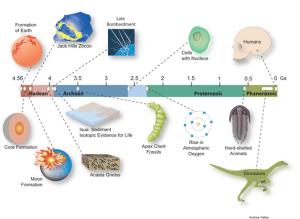
Well, scientists just took one of geology's biggest controversies and shrunk it down to atomic size. By zapping single atoms of lead in a tiny zircon crystal from Australia, researchers have confirmed the crystal is the oldest rock fragment ever found on Earth — 4.375 billion years old, plus or minus 6 million years.
"We've proved that the chemical record inside these zircons is trustworthy," said John Valley, lead study author and a geochemist at the University of Wisconsin, Madison. The findings were published today (Feb. 23) in the journal Nature Geoscience.
Confirmation of the zircon age holds enormous implications for models of early Earth. Trace elements in the oldest zircons from Australia's Jack Hills range suggest they came from water-rich, granite-like rocks such as granodiorite or tonalite, other studies have reported. That means Earth cooled quickly enough for surface water and continental-type rocks just 100 million years after the moon impact, the massive collision that formed the Earth-moon system. [How Was The Moon Formed?]
"The zircons show us the earliest Earth was more like the Earth we know today," Valley said. "It wasn't an inhospitable place."
Dubious history
Zircons are one of the toughest minerals on the planet. The ancient Australian crystals date back to just 165 million years after Earth formed, and have survived tumbling trips down rivers, burial deep in the crust, heating, squeezing and a tectonic ride back to the surface. The Australian zircons, from the Jack Hills, aren't the oldest rocks on Earth — those are in Canada — but about 3 billion years ago, the minerals eroded out some of Earth's first continental crust and became part of a riverbed.
Geologists have carefully sorted out more than 100,000 microscopic Jack Hills zircons that date back to Earth's early epochs, from 3 billion to nearly 4.4 billion years ago. (The planet is 4.54 billion years old.) The crystals contain microscopic inclusions, such as gas bubbles, that provide a unique window into conditions on Earth as life arose and the first continents formed.
Just three of the very oldest zircons have been found, ones that date back to almost 4.4 billion years ago. Their extreme age always makes the dates suspect, because of possible radiation damage. The radiation damage means the zircons could have been contaminated during their long lifetime.
Zircons hold minute amounts of two naturally occurring uranium isotopes — isotopes are atoms of the same element with different numbers of neutrons. Uranium radioactively decays to lead at a steady rate. Counting the number of lead isotopes is how scientists date the crystals. But as the uranium kicks out lead atoms, the radioactive decay releases alpha particles, which can damage the crystals, creating defects. These defects mean fluids and outside elements can infiltrate the crystals, casting doubt on any conclusions about early Earth based on the zircons.
More important, uranium and lead can move around within a crystal, or even escape or enter the zircon. This mobility can throw off the lead isotope count used to calculate the zircon ages, and is the source of thedecades-long controversy over the Jack Hills zircons' Methuselah lifespan.
"If there's a process by where lead can move from one part of the crystal to another place, then the place where lead is concentrated will have an older apparent age and the place from where it moves will have a younger apparent age," Valley said.
Atom by atom
Valley and his co-authors hope to end the debate by showing that even though one of the oldest Jack Hills zircons suffered radiation damage, the lead atoms stayed in place. The researchers painstakingly counted individual lead atoms within the oldest-known zircon with a recently developed technique called atom-probe tomography. Inside the zircon, lead atoms clustered together in damage zones just a few nanometers wide. Imagine cliques of teens during high school lunch — like teenagers, no lead atoms had left their zones.
"We've demonstrated this zircon is a closed geochemical system, and we've never been able to do that before," Valley said. "There's no question that many zircons do suffer radiation damage, but I think relative to these zircons, this should settle it once and for all," Valley told Live Science's Our Amazing Planet.
The key finding, that lead atoms stick close to home inside this primeval zircon, means age estimates based onuranium-lead dating techniques are accurate, the researchers report. The lead hasn't wiggled around enough to throw off the ages. A typical age measurement, made with a machine called an ion probe, zaps zircon segments that are thousands of times larger than the damage clusters.
"This careful piece of work should settle the debate because it shows that indeed there is some mobility of lead, which was hypothesized to result in dates that were too old, but the scale of mobility is nanometers," said Samuel Bowring, a geochemist at MIT, who was not involved in the study. "Even the smallest volumes analyzed with the ion probe average out the heterogeneities," or variations within the zircon.
The new atom-probe technique, while extremely laborious, can also be used to address questions of reliability at other sites where extremely old rocks have been found, the researchers said. [Have There Always Been Continents?]
"Good zircons are forever, and what this does is help us separate the wheat from the chaff in a way we could never do before," Valley said.
Email Becky Oskin or follow her @beckyoskin. Follow us @OAPlanet, Facebook and Google+. Original article at Live Science's Our Amazing Planet.
Copyright 2014 LiveScience, a TechMediaNetwork company. All rights reserved. This material may not be published, broadcast, rewritten or redistributed.


Confirmed: Oldest Fragment of Early Earth is 4.4 Billion Years Old

Wednesday, February 12, 2014

Shroud of Turin: Could Ancient Earthquake Explain Face of Jesus?

The authenticity of the Shroud of Turin has been in question for centuries and scientific investigations over the last few decades have only seemed to muddle the debate. Is the revered cloth a miracle or an elaborate hoax?


Now, a study claims neutron emissions from an ancient earthquake that rocked Jerusalem could have created the iconic image, as well as messed up the radiocarbon levels that later suggested the shroud was a medieval forgery. But other scientists say this newly proposed premise leaves some major questions unanswered.


The Shroud of Turin, which bears a faint image of a man's face and torso, is said to be the fabric that covered Jesus' body after his crucifixion in A.D. 33. Though the Catholic Church doesn't have an official position on the cloth, the relic is visited by tens of thousands of worshippers at the Turin Cathedral in Italy each year. [Religious Mysteries: 8 Alleged Relics of Jesus]


Carbon and quakes

Radiocarbon dating tests conducted at three different labs in the 1980s indicated the cloth was less than 800 years old, produced in the Middle Ages, between approximately A.D. 1260 and 1390. The first records of the shroud begin to appear in medieval sources around the same time, which skeptics don't think is a coincidence. Those results were published in the journal Nature in 1989. But critics in favor of a much older date for the cloth have alleged that those researchers took a sample of fabric that was used to patch up the burial shroud in the medieval period, or that the fabric had been subjected to fires, contamination and other damaged that skewed the results.


The new theory hinges on neutrons released by a devastating earthquake that hit Old Jerusalem around the same time that Jesus is believed to have died. [Who Was Jesus, the Man?]

All living things have the same ratio of stable carbon to radioactive carbon-14, but after death, the radioactive carbon decays in a predictable pattern over time. That's why scientists can look at the carbon-14 concentration in organic archaeological materials like fabrics, bones and wood to estimate age. Carbon-14 is typically created when neutrons from cosmic rays collide with nitrogen atoms in the atmosphere (though it can be unleashed by manmade nuclear reactions, too).


The group of scientists, led by Alberto Carpinteri of the Politecnico di Torino in

Italy, suspect high-frequency pressure waves generated in the Earth's crust during this earthquake could have produced significant neutron emissions. (They simulated this by crushing very brittle rock specimens under a press machine.)


These neutron emissions could have interacted directly with nitrogen atoms in the linen fibers, inducing chemical reactions that created the distinctive face image on the shroud, the scientists say. The reactions also could have led to "a wrong radiocarbon dating," which would explain the results of the 1989 experiments, Carpinteri said in a statement.


Giulio Fanti, a professor of mechanical engineering at Padua University, published a book last year "Il Mistero della Sindone," translated as "The Mystery of the Shroud," (Rizzoli, 2013), arguing that his own analysis proves the shroud dates to Jesus' lifetime. In an email, Fanti said he is not sure if a neutron emission is the only possible source responsible for creating the body image. (His own theories include a corona discharge.) However, he wrote that he is "confident" the 1980s radiocarbon dating "furnished wrong results probably due to a neutron emission."

Shaky science?


Even if it is theoretically possible for earthquake-generated neutrons to have caused this kind of reaction, the study doesn't address why this effect hasn't been seen elsewhere in the archaeological record, Gordon Cook, a professor of environmental geochemistry at the University of Glasgow, explained.


"It would have to be a really local effect not to be measurable elsewhere," Cook told Live Science. "People have been measuring materials of that age for decades now and nobody has ever encountered this."


Christopher Ramsey, director of the Oxford Radiocarbon Accelerator Unit, had a similar issue with the findings.


"One question that would need to be addressed is why the material here is affected, but other archaeological and geological material in the ground is not," Ramsey wrote in an email. "There are huge numbers of radiocarbon dates from the region for much older archaeological material, which certainly don't show this type of intense in-situ radiocarbon production (and they would be much more sensitive to any such effects)."


Ramsey added that using radiocarbon dating to study objects from seismically active regions, such as regions like Japan, generally has not been problematic.


It seems unlikely that the new study, published in the journal Meccanica, will settle any of the long-standing disputes about how and when the cloth was made, which depend largely on faith.

"If you want to believe in the Shroud of Turin, you believe in it," Cook said.


Follow Megan Gannon on Twitter and Google+. Follow us @livescience, Facebook & Google+. Original article on Live Science.

Copyright 2014 LiveScience, a TechMediaNetwork company. All rights reserved. This material may not be published, broadcast, rewritten or redistributed.


By by Megan Gannon, News Editor 11 hours ago


Shroud of Turin: Could Ancient Earthquake Explain Face of Jesus?

Monday, February 03, 2014

Did Alien Life Evolve Just After the Big Bang?

Earthlings may be extreme latecomers to a universe full of life, with alien microbes possibly teeming on exoplanets beginning just 15 million years after the Big Bang, new research suggests.

Traditionally, astrobiologists keen on solving the mystery of the origin of life in the universe look for planets in habitable zones around stars. Also known as Goldilocks zones, these regions are considered to be just the right distance away from stars for liquid water, a pre-requisite for life as we know it, to exist.

But even exoplanets that orbit far beyond the habitable zone may have been able to support life in the distant past, warmed by the relic radiation left over from the Big Bang that created the universe 13.8 billion years ago, says Harvard astrophysicist Abraham Loeb. [The Big Bang to Now in 10 Easy Steps]

For comparison, the earliest evidence of life on Earth dates from 3.8 billion years ago, about 700 million years after our planet formed.

'Warm summer day'

Just after the Big Bang, the cosmos was a much hotter place. It was filled with sizzling plasma — superheated gas — that gradually cooled. The first light produced by this plasma is the cosmic microwave background radiation (CMB) that we observe today, which dates from about 389,000 years after the Big Bang.

Now the CMB is freezing cold — around minus 454 degrees Fahrenheit (minus 270 degrees Celsius; 3 degrees Kelvin). It cooled down gradually with the expansion of the universe, and at some point during the cooling process, for a brief period of seven million years or so, the temperature was just right for life to form — between 31 and 211 degrees Fahrenheit (0 and 100 degrees Celsius; 273 and 373 degrees Kelvin).


It is the CMB's heat that would have allowed water to remain liquid on ancient exoplanets, Loeb said.

"When the universe was 15 million years old, the cosmic microwave background had a temperature of a warm summer day on Earth," he said. "If rocky planets existed at that epoch, then the CMB could have kept their surface warm even if they did not reside in the habitable zone around their parent star." [Gallery: Planck Spacecraft Sees Big Bang Relics]

But the question is whether planets — and especially rocky planets — could already have formed at that early epoch.

According to the standard cosmological model, the very first stars started to form out of hydrogen and helium tens of millions of years after the Big Bang. No heavy elements, which are necessary for planet formation, were around yet.

But Loeb says that rare "islands" packed with denser matter may have existed in the early universe, and massive, short-lived stars could have formed in them earlier than expected. Explosions of these stars could have seeded the cosmos with heavy elements, and the very first rocky planets would have been born.

These first planets would have been bathed in the warm CMB radiation, and thus, Loeb argues, it would have been possible for them to have liquid water on their surface for several million years.

Loeb says that one way to test his theory is by searching in our Milky Way galaxy for planets around stars with almost no heavy elements. Such stars would be the nearby analogues of the early planets in the nascent universe.

View gallery

A 2013 map of the background radiation left over from the Big Bang, taken by the ESA's Planck sp …

Constant or not?

Based on his findings, Loeb also challenges the idea in cosmology known as the anthropic principle. This concept attempts to explain the values of fundamental parameters by arguing that humans could not have existed in a universe where these parameters were any different than they are.

So while there might be many regions in a bigger "multiverse" where the values of these parameters vary, intelligent beings are supposed to exist only in a universe like ours, where these values are exquisitely tuned for life.

For instance, Albert Einstein identified a fundamental parameter, dubbed the cosmological constant, in his theory of gravity. This constant is now thought to account for the accelerating expansion of the universe.

Also known as dark energy, this constant can be interpreted as the energy density of the vacuum, one of the fundamental parameters of our universe.

Anthropic reasoning suggests that there might be different values for this parameter in different regions of the multiverse — but our universe has been set up with just the right cosmological constant to allow our existence and to enable us to observe the cosmos around us.

Loeb disagrees. He says that life could have emerged in the early universe even if the cosmological constant was a million times bigger than observed, adding that "the anthropic argument has a problem in explaining the observed value of the cosmological constant."

Edwin Turner, a professor of astrophysical sciences at Princeton University, who was not involved in the new study, called the research "very original, stimulating and thought-provoking."

Astrophysicist Joshua Winn of the Massachusetts Institute of Technology, who did not take part in the study either, agrees.

"In our field, it has become traditional to adopt a definition of a 'potentially habitable' planet as one that has a solid surface and a surface temperature conducive to liquid water,” he said. "Many, many papers have been written about the exact conditions under which we might find such planets — what type of interior composition, atmosphere, and stellar radiation field. Avi has taken this point to a logical extreme, by pointing out that if those two conditions are really the only important conditions, then there is another way to achieve them, which is to make use of the cosmic microwave background."

Loeb's paper is available at http://arxiv.org/abs/1312.0613

Follow Katia Moskvitch on Twitter @SciTech_Cat. Follow SPACE.com on Twitter @Spacedotcom. We're also on Facebook and Google+. Original article on Space.com. 
Copyright 2014 SPACE.com, a TechMediaNetwork company. All rights reserved. This material may not be published, broadcast, rewritten or redistributed.
By Katia Moskvitch, Space.com Contributor

Did Alien Life Evolve Just After the Big Bang?